
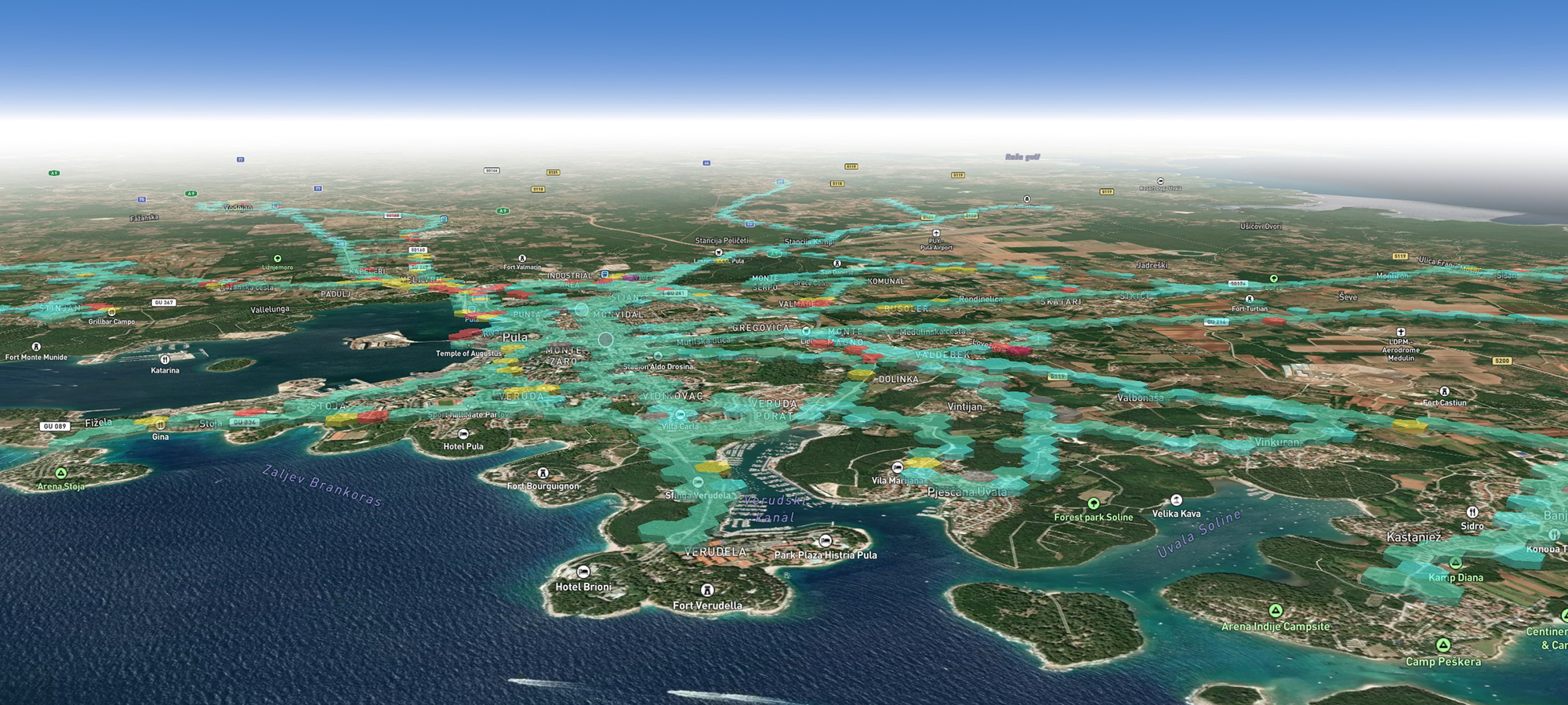
As part of the EU-funded project Urban Mind, Smart Sense deployed a new generation of Sensees mobile air quality monitoring stations to help cities better understand the spatial and temporal dynamics of air quality in urban environments.
The project is implemented within the European Data Space for Smart Communities programme and connects two cities – Pula, Croatia and Kranj, Slovenia – through a shared goal: collecting high-resolution, real-world air quality data directly from urban mobility systems.
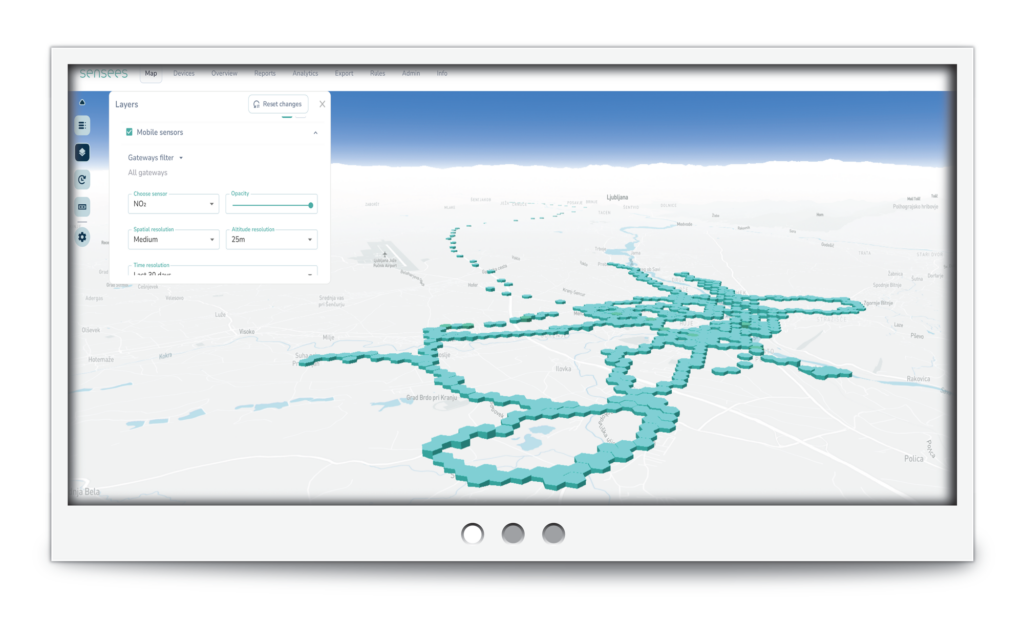
By integrating Sensees mobile monitoring stations into public transport, cities gain continuous, spatially rich data that complements traditional fixed monitoring networks and provides new insight into pollution patterns across the urban environment.
Monitoring Challenges in Urban Environments
Urban air quality is strongly influenced by traffic flows, congestion patterns and daily mobility habits.
However, traditional fixed monitoring stations offer limited spatial coverage and often cannot capture rapid changes in air quality across different parts of the city.
At the start of the project, neither Pula nor Kranj had comprehensive, city-wide air quality data that could provide an overview of current conditions or identify critical pollution hotspots. This made it challenging to understand where air quality issues were most pronounced and where long-term monitoring efforts should be prioritised.
Both cities faced the challenge of:
- understanding how traffic contributes to local air pollution,
- identifying pollution hotspots along key transport corridors,
- and supporting data-driven decisions for long-term environmental planning.
In this context, mobile air quality monitoring represented an effective starting point. By collecting measurements across a wide urban area, mobile stations help cities establish a baseline understanding of air quality, detect critical locations, and inform future decisions – including where fixed monitoring stations should be installed.
To address these challenges, the Urban Mind project introduced Sensees mobile air quality monitoring as a core component of its measurement strategy.
Solution: Mobile monitoring on public transport
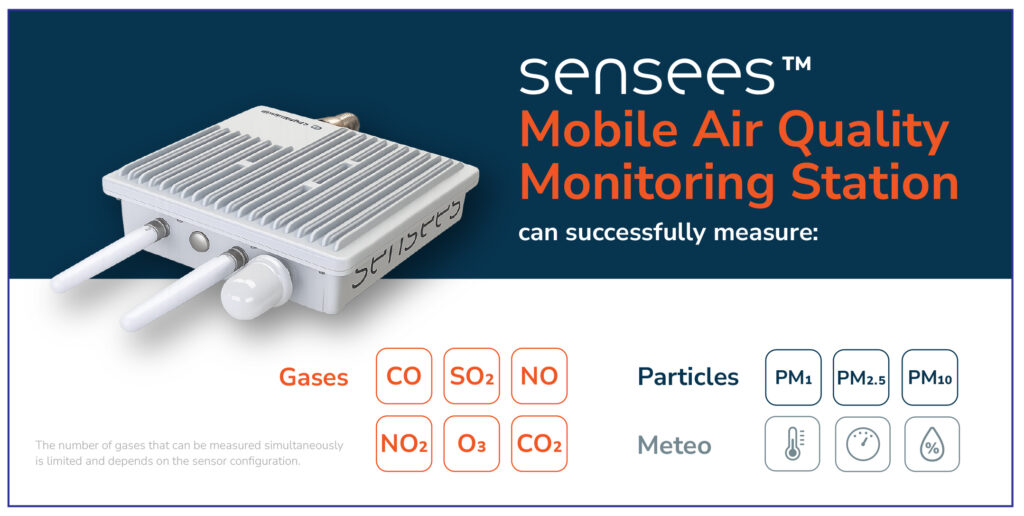
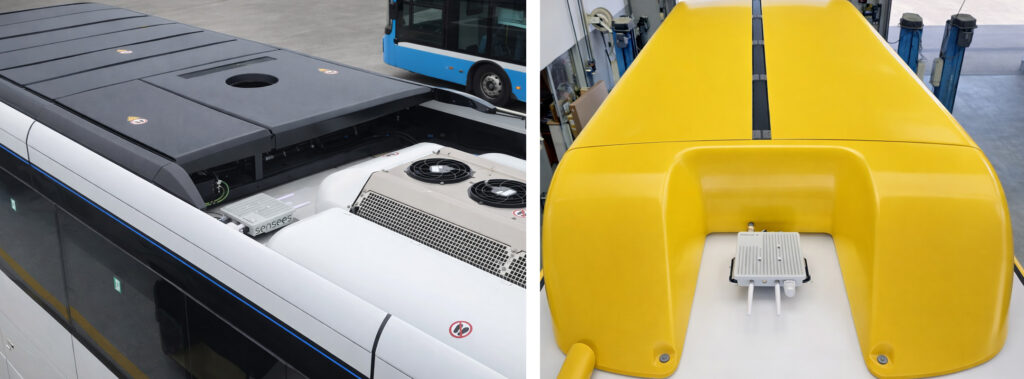
Smart Sense supplied Sensees mobile air quality monitoring stations designed for installation on public transport vehicles, enabling air quality measurements in motion.
City of Pula
In Pula, two mobile monitoring stations were installed on public transport buses.
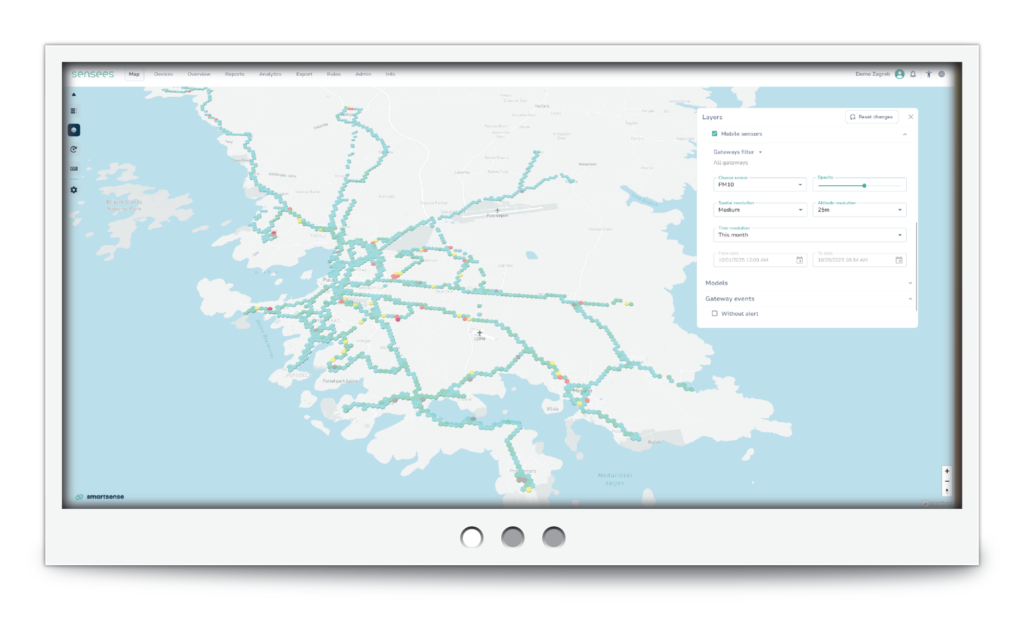
As the buses move through the city on regular routes, the stations continuously collect air quality data, creating a dynamic picture of pollution levels across different neighbourhoods and traffic conditions.
To maximise spatial coverage, the routes of the buses equipped with mobile stations are periodically adjusted, allowing data to be collected from a wider area of the city and across different urban zones.
Pula became the first city in Croatia to measure air quality in real time using public transport buses, marking an important milestone in urban environmental monitoring and setting an example for other cities.
In Pula, Sensees mobile monitoring stations measure key environmental parameters, including temperature, humidity and air pressure, as well as air pollutants NO₂, NO, CO₂, CO and particulate matter PM₁₀, PM₂.₅ and PM₁. This combination of measurements creates a holistic overview of air quality and environmental conditions in real urban settings.
City of Kranj
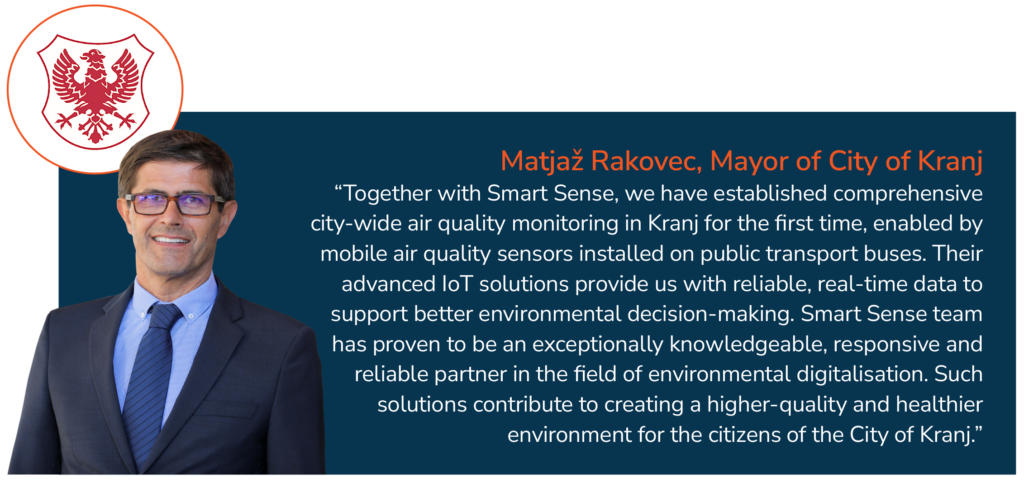
In Kranj, the project expanded to a larger scale.
Ten mobile monitoring stations were delivered and deployed across the wider city area, following several years of preparation and collaboration.
The project is designed as a long-term initiative, with a planned duration of five years and a phased expansion of the monitoring fleet.
In the next phase, additional buses will be equipped with mobile stations, increasing the total number to sixteen and further extending the coverage of air quality measurements.
In Kranj, Sensees mobile monitoring stations measure temperature, humidity and air pressure, along with key air pollutants NO₂, NO, CO and CO₂, and particulate matter PM₁₀, PM₂.₅ and PM₁. This expanded set of parameters allows for deeper insight into both air quality and broader environmental dynamics, supporting more informed urban planning and long-term sustainability efforts.
Collaboration at the Core
The Sensees Mobile Air Quality Monitoring Stations form part of a broader smart city ecosystem developed within the Urban Mind project.
Beyond air quality measurements, the project brings together multiple data sources to create a more complete picture of urban mobility and environmental impact.
Traffic cameras installed along major roads complement the air quality data, while a dedicated Sensees Environmental Platform enables the collection, visualisation, interpretation and correlation of all measured parameters in one place.
Smart Sense had the opportunity to contribute to this initiative as the supplier of mobile air quality monitoring stations, working closely with a strong network of partners whose expertise was essential to the successful implementation of the project:
This collaboration made it possible to move from concept to real-world deployment, combining environmental data with mobility and traffic insights within a single analytical framework. Together, the partners helped demonstrate how integrated technologies can support cities in better understanding their air quality challenges and building a foundation for smarter, data-driven urban planning.
Results & value
The deployment of mobile air quality monitoring stations delivers several key benefits:
- significantly increased spatial coverage of air quality measurements,
- improved understanding of pollution patterns linked to traffic and mobility,
- real-world data to support long-term urban and environmental strategies,
- a scalable monitoring approach that can grow with city needs.
By capturing air quality data where people actually move, cities gain a more realistic and actionable view of their air quality challenges.
Expanding the Smart Sense portfolio
Sensees Mobile Air Quality Monitoring Stations represent an important step in expanding the Smart Sense product portfolio.
They complement existing fixed monitoring solutions and enable cities to combine static and dynamic data sources into a single, coherent air quality strategy.
The projects in Pula and Kranj demonstrate how mobile monitoring can be successfully integrated into real urban environments, turning everyday public transport into a powerful data collection tool.