

When people think about air quality monitoring, they usually focus on pollutant concentrations like PM₂.₅, NO₂, ozone, or AQI values. But air pollution does not exist in isolation. The behavior of pollutants in the atmosphere is constantly influenced by weather conditions.
This is why meteorological data plays a crucial role in understanding air quality correctly.
Without weather context, air quality measurements can only tell part of the story.
Air Quality Is Shaped by Weather
Research consistently shows that meteorological conditions are among the most important factors influencing air pollutant concentrations. Air pollutants move, accumulate, disperse, and react depending on atmospheric conditions. Even when emissions remain constant, measured concentrations can change significantly due to weather alone.
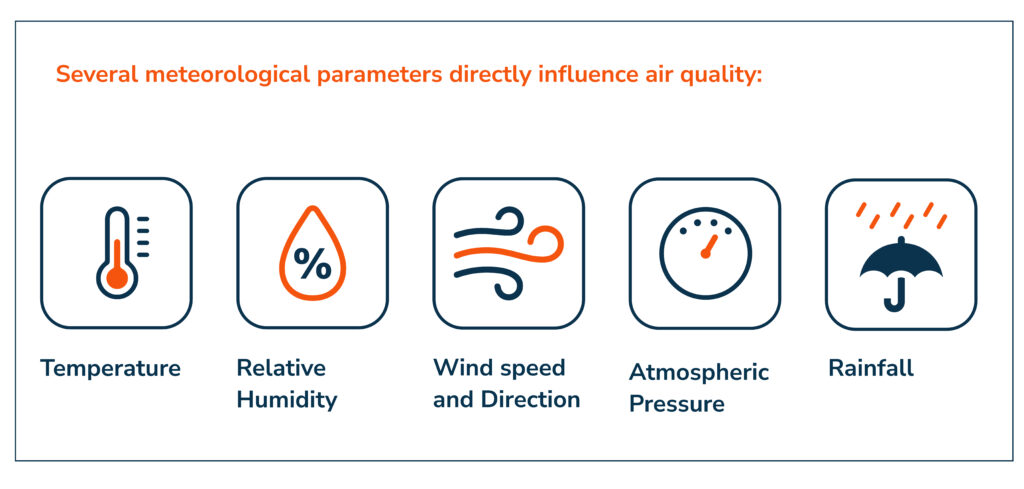
Together, these factors help explain why pollution levels change throughout the day, across seasons, or between different locations.
For example, during large industrial fires, wind speed and direction become critical pieces of information. Smoke and pollutants released during these events can be transported far beyond the source, meaning that affected areas are often determined more by wind direction than by proximity to the fire itself. In fact, studies such as those conducted by the University of Illinois have shown that smoke plumes can travel hundreds or even thousands of kilometres depending on meteorological conditions. Knowing where the pollution plume is moving helps authorities issue timely warnings and allows citizens to better protect themselves from exposure.
Temperature and Atmospheric Stability
Temperature affects how air moves vertically in the atmosphere.
Under normal conditions, warm air rises and helps disperse pollutants. However, during temperature inversions, colder air becomes trapped near the ground beneath a layer of warmer air. This prevents pollutants from dispersing properly and can lead to sudden increases in pollution concentrations.
These situations are especially common during colder months and are often associated with severe urban smog episodes.
Humidity
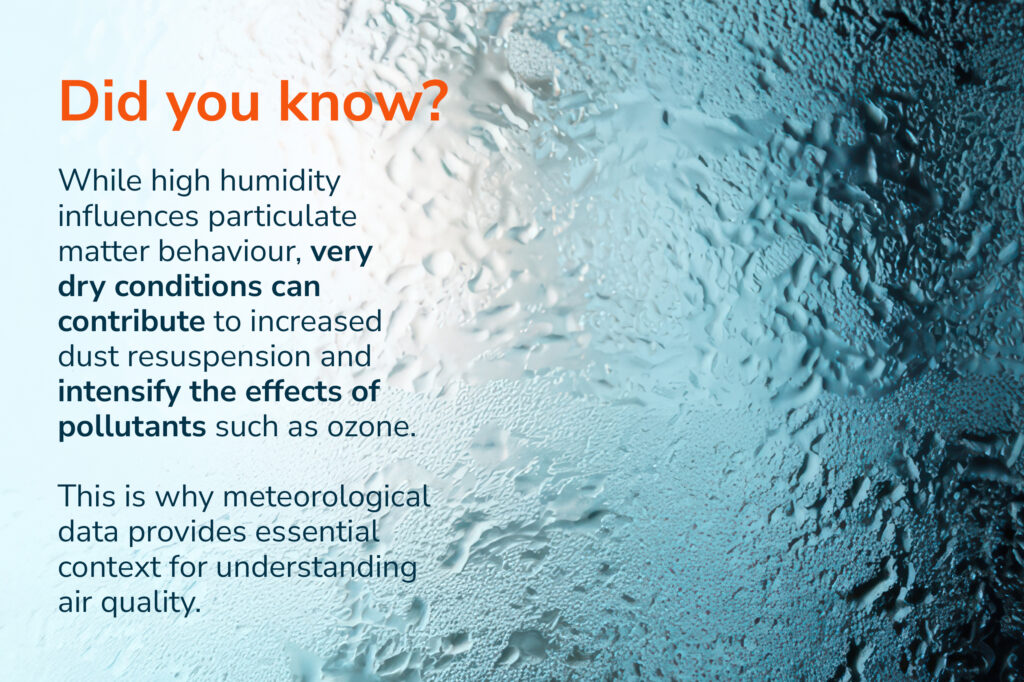
Humidity can significantly influence particulate matter measurements.
Airborne particles absorb moisture from the air, which can increase their apparent size and affect optical PM sensor readings in many low-cost monitoring systems.
Understanding humidity conditions is important not only for interpreting measurements correctly, but also for designing monitoring systems capable of delivering reliable long-term data.
To address this challenge, Sensees Outdoor Air Quality monitoring stations incorporate a built-in heating element that prevents moisture from affecting PM measurements, ensuring reliable readings even under high-humidity conditions. However, such performance is not achieved by hardware alone; it is the result of continuous development, calibration, testing, and a thorough understanding of how meteorological factors influence measurement results.
Rainfall and Natural Air Cleaning
Rain acts as a natural cleaning mechanism for the atmosphere.
Rainfall removes particles and certain pollutants from the air, often leading to noticeable drops in PM concentrations after rainfall events.
This is why pollutant spikes are frequently followed by cleaner air once rain begins.
Known as the washout effect, rainfall acts as a natural filter for the atmosphere, washing particles and certain pollutants out of the air as it falls.
Why Meteorological Modules Matter
Adding meteorological modules to air quality monitoring stations provides critical environmental context behind the measurements.
Instead of only knowing what the pollution level is, weather data helps explain why it changes.
This allows for:
- more accurate interpretation of air quality data
- better identification of pollution sources
- improved environmental analysis
- more reliable long-term monitoring
- smarter decision-making for cities, industries, and building management
In many cases, meteorological parameters are just as important as the pollutant measurements themselves.
Beyond Measurements: Understanding the Bigger Picture
Reliable air quality monitoring is not only about collecting pollutant concentrations. It is about understanding the environmental conditions shaping those measurements.
Weather data transforms isolated readings into meaningful insight.
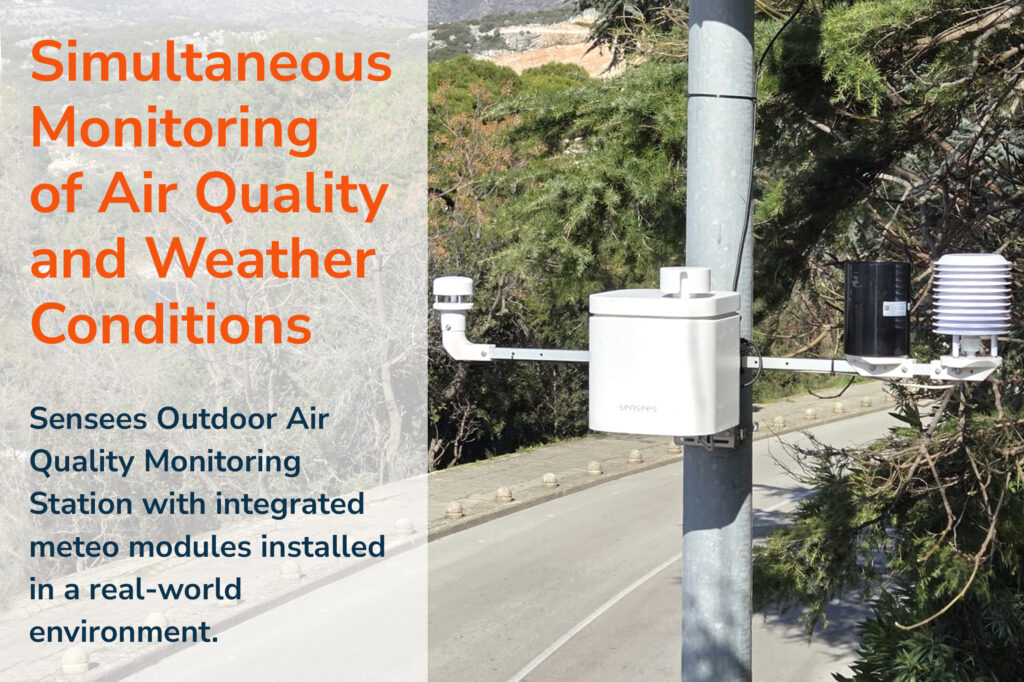
At Smart Sense, meteorological modules can be integrated into Sensees outdoor air quality monitoring stations, enabling a more complete understanding of environmental conditions and helping users interpret air quality data with greater accuracy and confidence.
The Sensees Environmental platform can integrate meteorological data from both Sensees modules and third-party sensors, bringing all relevant environmental information together in a single system. By combining air quality measurements with weather data, users gain a broader perspective of what is happening in the field, making it easier to identify patterns, understand pollution events, and draw more meaningful conclusions.
Because the more context behind the data, the clearer the picture becomes.
As environmental monitoring becomes increasingly important for cities, businesses, and communities, understanding the factors behind the measurements is becoming just as important as the data themselves.
Together, they provide the insight needed for better decisions and a deeper understanding of the environment around us.